



アルミニウム線材圧延機
/In today's demanding metal manufacturing environment, the ability to maintain precise strip thickness consistently throughout the rolling process has become a fundamental requirement for quality production. The automatic gauge control (AGC) system represents a technological leap forward in achieving this precision, transforming what was once a manual, experience-dependent process into a highly automated and reliable operation. At the heart of this system lies sophisticated control algorithms that continuously monitor and adjust the rolling parameters to compensate for any deviations from the target thickness. The implementation of AGC technology has become particularly crucial in cold rolling applications where tighter tolerances and superior surface finishes are required. Unlike hot rolling processes where material properties are more forgiving, the automatic gauge control cold rolling mill must account for work hardening effects, varying material properties, and the need for exceptional surface quality. This demanding environment is where modern AGC system s demonstrate their true value, combining high-speed sensing with rapid mechanical adjustments to maintain gauge consistency that would be impossible to achieve through manual control methods. Fundamental Mechanisms of Gauge Control in Rolling Operations The effectiveness of an automatic gauge control system stems from its ability to integrate multiple control strategies into a cohesive, responsive network. At its core, the system relies on precise measurement devices that provide real-time feedback about the actual strip thickness as it passes through the mill. These measurements feed into the AGC controller , which processes the information and determines the necessary adjustments to the rolling parameters. What sets advanced AGC system s apart is their capacity to anticipate changes before they fully manifest in the product. Through sophisticated modeling of material behavior and mill dynamics, the system can predict how various factors - including incoming material variations, temperature fluctuations, and rolling speed changes - will affect the final gauge. This predictive capability allows for proactive adjustments rather than reactive corrections, resulting in smoother operation and more consistent product quality. The integration of automatic pressure control further enhances this capability by ensuring that rolling forces remain within optimal ranges throughout the process. Technological Evolution of Gauge Control Systems The development of AGC technology has followed a path of increasing sophistication and integration. Early systems relied primarily on feedback control, making adjustments after thickness variations were detected. While effective to a degree, this approach inherently involved a lag between problem detection and correction. Modern systems have overcome this limitation through the implementation of feedforward control strategies that use upstream measurements to anticipate and compensate for variations before they reach the critical rolling stands. Contemporary automatic gauge control in strip rolling operations now incorporates advanced features such as adaptive learning algorithms that continuously refine their control parameters based on actual performance data. These systems can recognize patterns in material behavior and adjust their control strategies accordingly, effectively "learning" the characteristics of specific alloys or product grades. This adaptive capability proves particularly valuable when processing materials with non-linear hardening characteristics or when transitioning between different product specifications. Operational Advantages of Advanced AGC Implementation The benefits of implementing a sophisticated automatic gauge control system extend far beyond simple thickness consistency. By maintaining precise control over the rolling process, these systems enable manufacturers to achieve significant improvements in overall operational efficiency. The reduction in gauge variation translates directly to improved material yield, as less product falls outside specification limits. This yield improvement often justifies the investment in AGC technology alone, with many operations seeing payback periods measured in months rather than years. Beyond the quantifiable metrics of quality and yield, AGC system s contribute to more stable mill operation overall. The constant adjustments made by the automatic gauge control cold rolling mill help maintain steady rolling forces, which in turn reduces wear on critical components and extends equipment life. The consistency provided by these systems also simplifies downstream processing, as subsequent operations can be optimized for a more predictable input material. This holistic improvement across the production chain represents one of the most compelling arguments for AGC adoption in modern rolling operations. The integration of AGC with other mill control systems is also progressing rapidly. Modern automatic gauge control system s are increasingly designed as components of comprehensive mill-wide control architectures rather than standalone solutions. This integration allows for more holistic optimization of the entire rolling process, considering not just gauge control but also energy efficiency, production rate, and product quality across multiple dimensions. As these technologies mature, we can expect to see even tighter integration between automatic pressure control , temperature management, and gauge control systems, creating truly intelligent rolling mills capable of self-optimization across a wide range of operating conditions.

We have successfully executed over 500
projects around the world,
many first-of-their-kind
research projects and products in China, including
We have successfully executed over 500
projects around the world,
many first-of-their-kind
research projects and products in China, including
-
2004
The 1st hydraulic AGC system for hot rolling of ribbon steel
-
2006
The 1st AFC system used for 1450mm skin pass mill
-
2009
The 1st 5-stand tandem line with 2-stand POR & Uncoiler for 650mm ribbon steel
-
2012
The 1st reversing mill for 1380mm strip
-
2016
The 1st soft-rolling system used in skin pass mill
-
2019
The 1st fully automated medium-width tandem cold rolling mill
-
2021
The 1st 5000KN Twin-stand double skin pass mill
-
2022
The 1st coupled pickling line & tandem cold mill with two modes - big roller & small roller
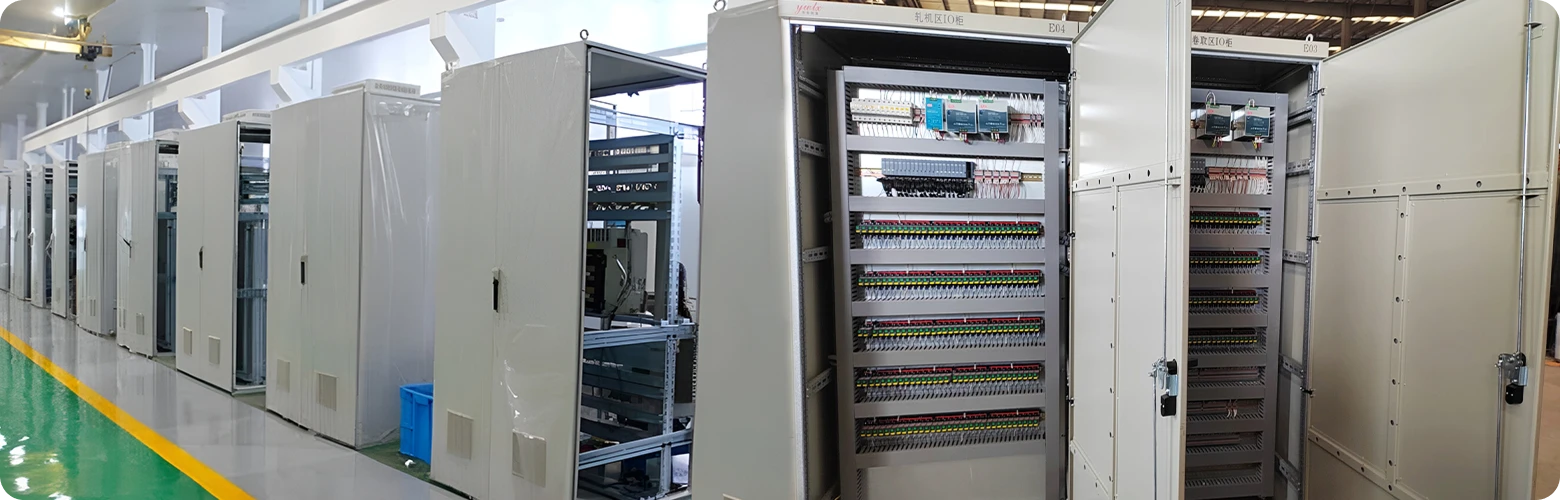
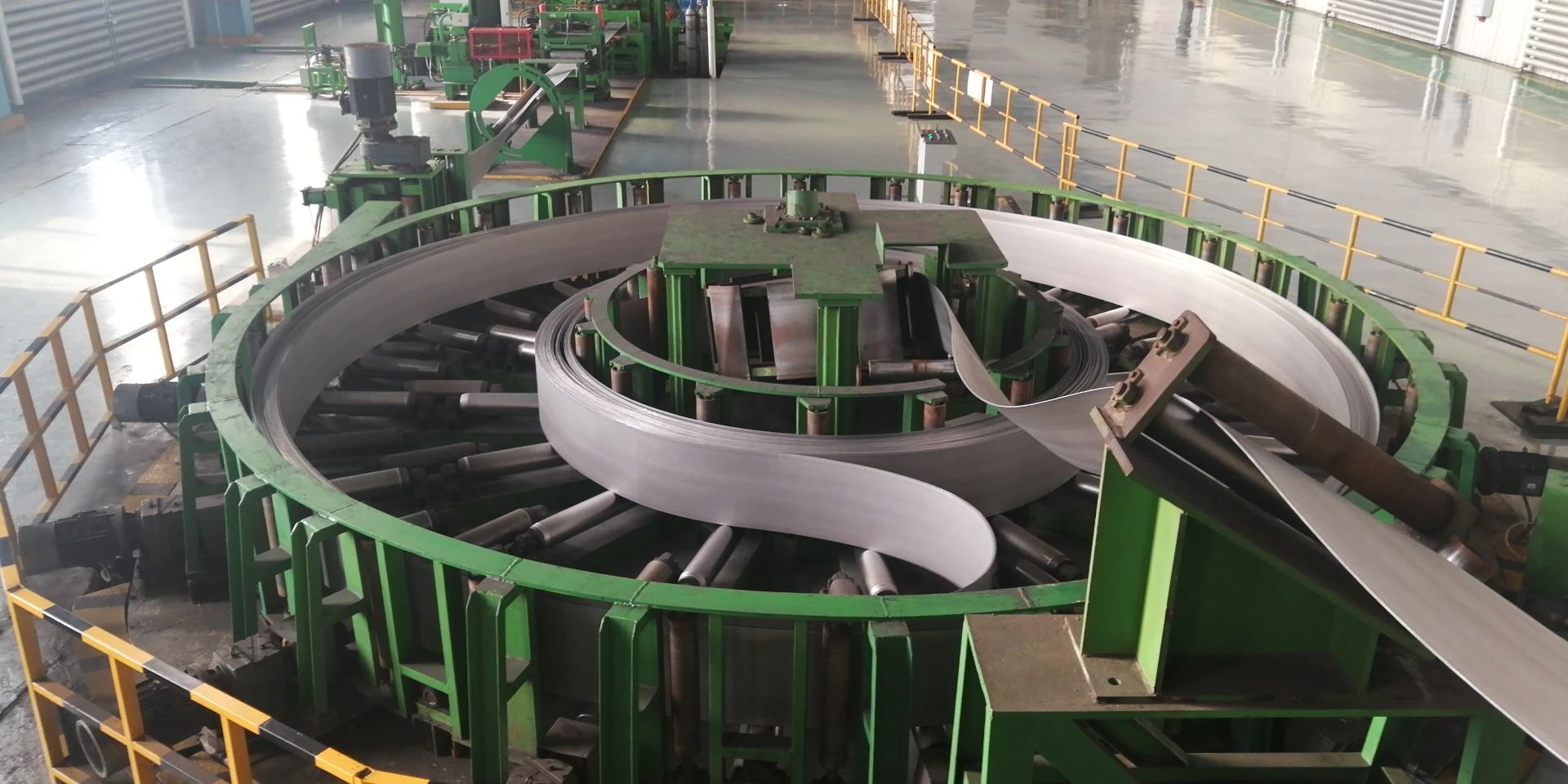
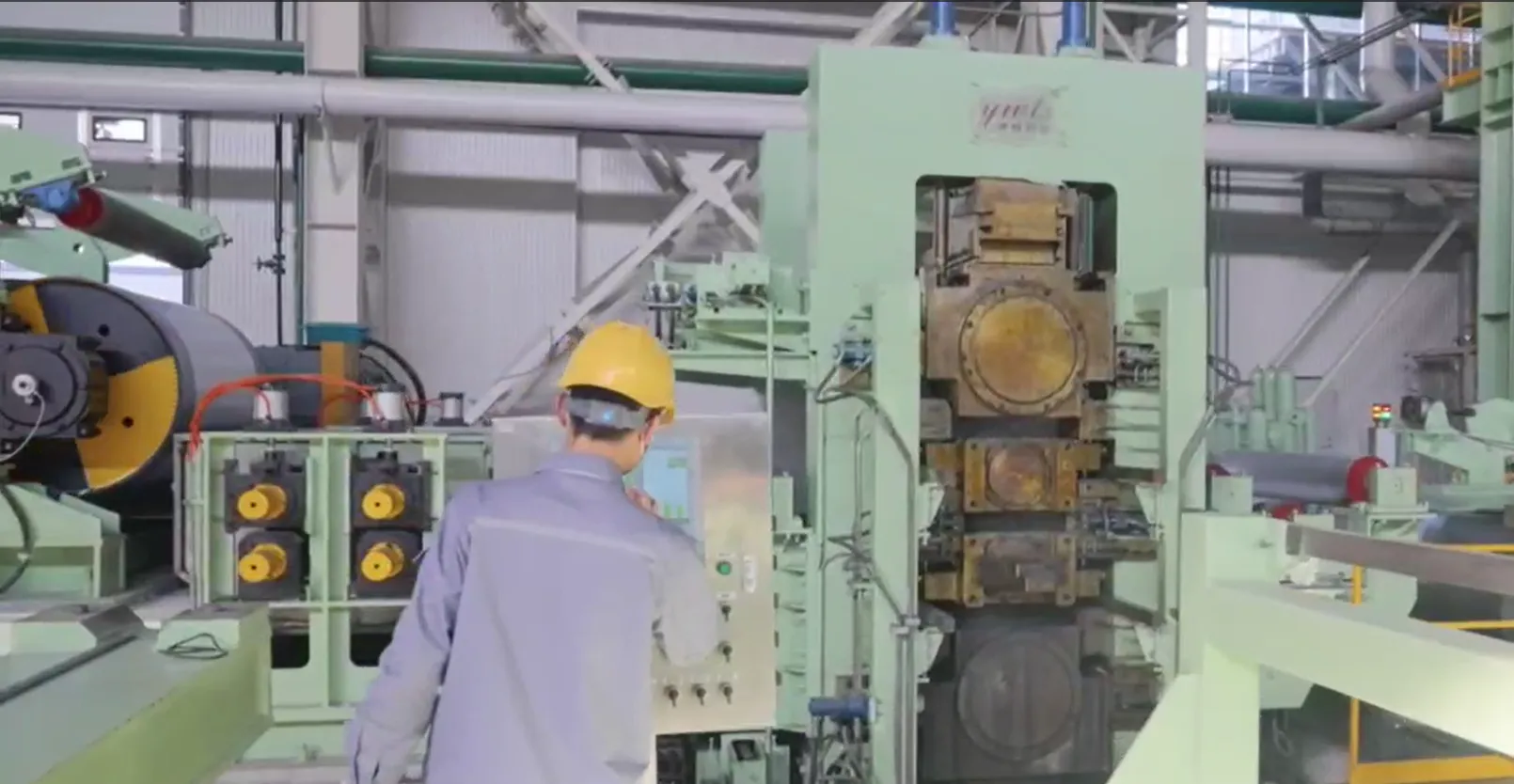
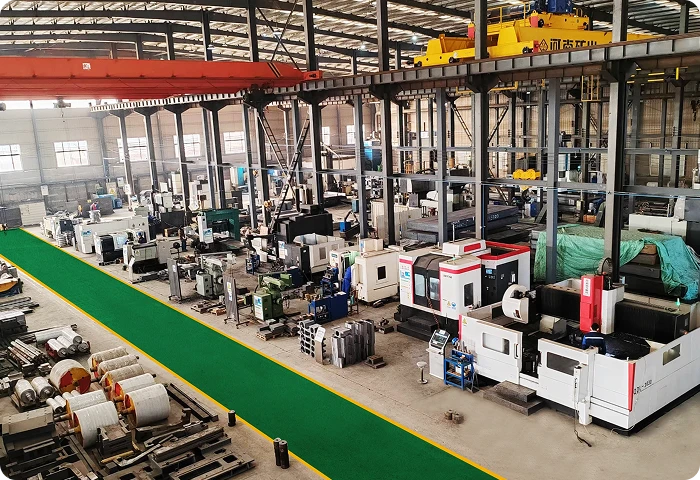
Yang Wang Li Xin operates a state-of-the-art facility over 66,000 square meters,and our manufacturing facility is fully equipped with high-tech machinery and high-capacity cranes. This enables us to handle large work pieces measuring 4.5m in width, 10m in length, and 1.5m in height, guaranteeing our capacity to produce 1800mm skin-pass mills and 1450mm rolling mills. The individual piece can weigh up to 100 tons.

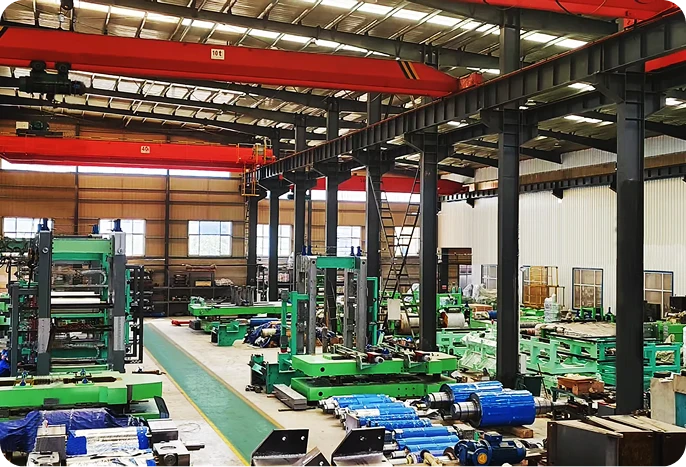

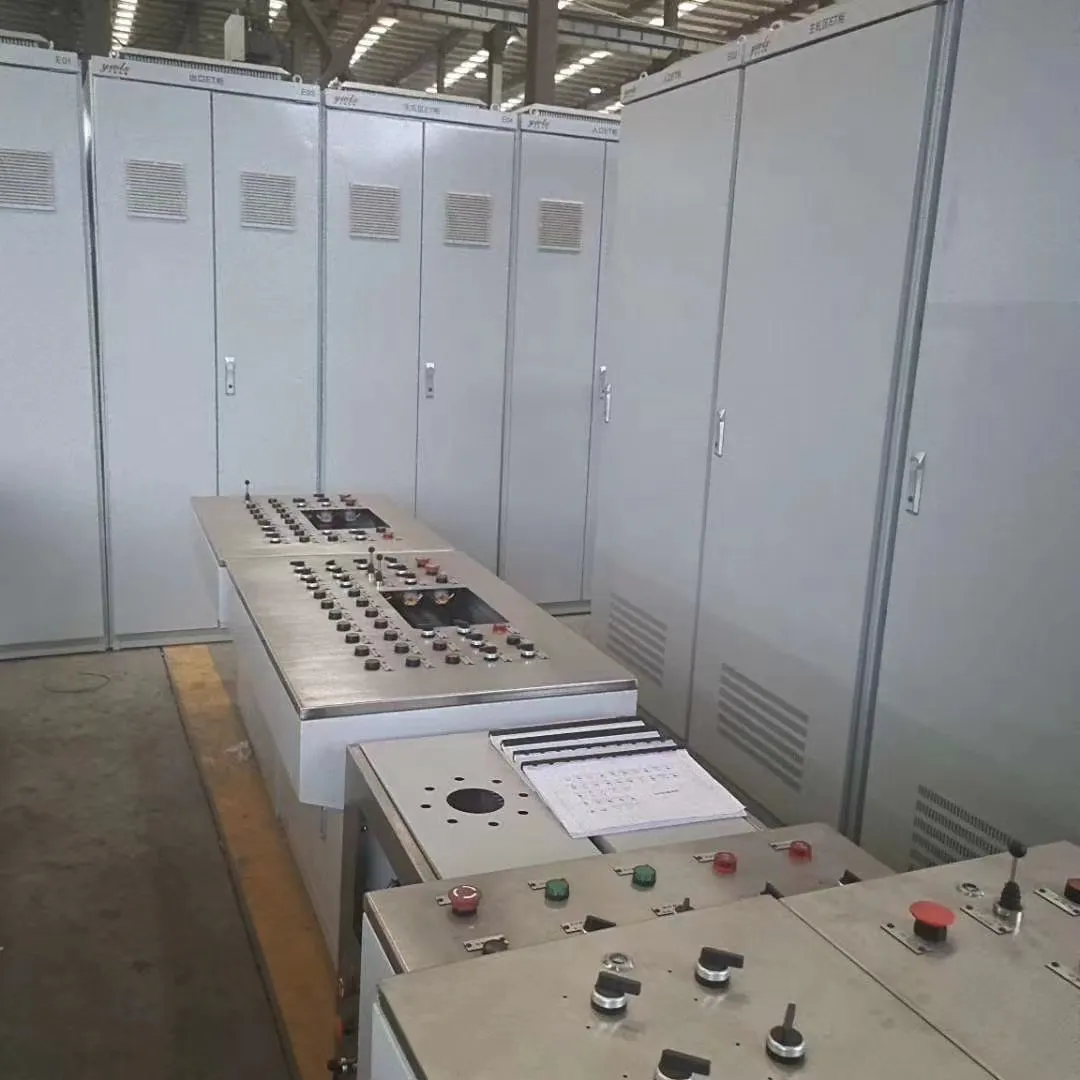
Quality is fundamental to the enterprise survival. We have established a comprehensive and meticulous quality management system and have successfully obtained ISO14000 certification. Starting from the design source, it supervises the entire production cycle, including design, procurement, processing, assembly, in-factory testing, installation, and online commissioning. The workshop is equipped with measuring tools like vernier calipers, spectrometers, hardness testers, and ultrasonic flaw detectors. They are used to check materials and control tolerances to ensure the final equipment meets or exceeds requirements. All products have a unique code, This enables the easy identification and traceability of the equipment components and ensures full control of quality.


-
 Cladding Rolling Mill - Beijing Yang Wang Li Xin Sci&Tech Co., Ltd. | Cold Rolling Cladding, Energy ConservationCladding Rolling Mill has emerged as a transformative solution in the metalworking industry, offering a sustainable and efficient alternative to traditional cladding methods. Developed by Beijing Yang Wang Li Xin Sci&Tech Co., Ltd. (formerly YWLX ), this technology leverages cold rolling processes to produce high-quality metal composites with minimal environmental impact. This article explores the
 -
 Cladding Rolling Mill - Beijing Yang Wang Li Xin Sci&Tech Co., Ltd. | Energy Efficiency, Environmental Protection, High YieldIntroduction to Cladding Technology In the realm of modern manufacturing, cladding technology has emerged as a critical solution for combining different metals to achieve superior performance in diverse industries. The Cladding Rolling Mill developed by Beijing Yang Wang Li Xin Sci&Tech Co., Ltd. (YWLX) represents a significant advancement in this field. This article delves into the technical feat
 -
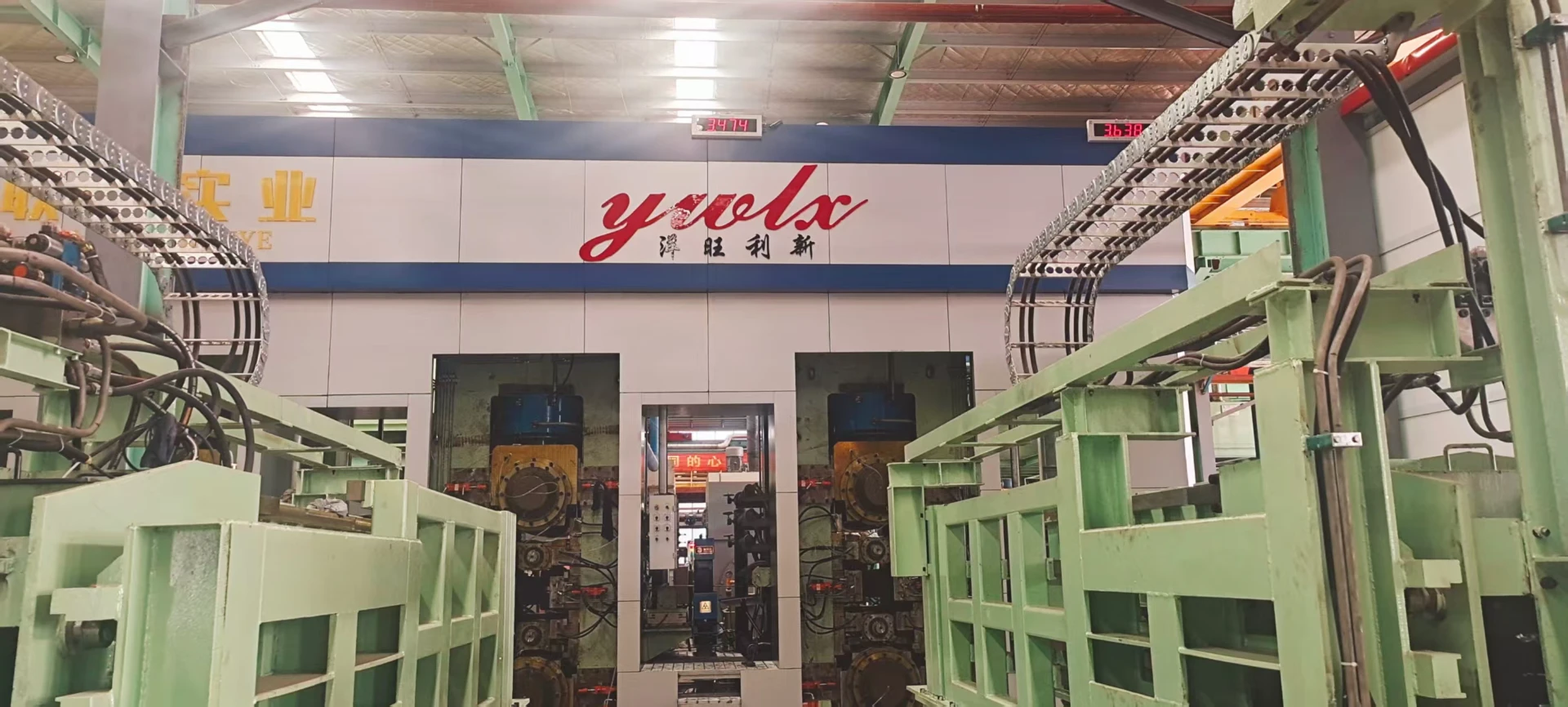 The Role of Tandem Cold Mills in Achieving Ultra-Thin Gauge SteelThe manufacturing of ultra-thin gauge steel represents one of the most demanding challenges in modern metallurgy, requiring precision engineering at an industrial scale. Tandem cold rolling mills have emerged as the premier solution for producing steel sheets with thicknesses below 0.5mm while maintaining exceptional flatness, surface quality, and mechanical properties. Unlike traditional single-s


